

How Do You Climb Trees?
Slowly, mostly

I was recently doing some rope-ascension tree climbing and a few friends were asking how that worked. Rather than answer them directly, I figured I’d talk about it here. That’s called *business*.
Now, there’s a version of tree climbing you might be picturing, with a lumberjack wearing spikes on his boots and a flip line wrapped around the trunk. That is a thing, but I don’t know anything about it. In fact, there’s a lot of ways to climb a tree (or any kind of ropes, in the vast world of rope access work), but I only know one. So here it is.
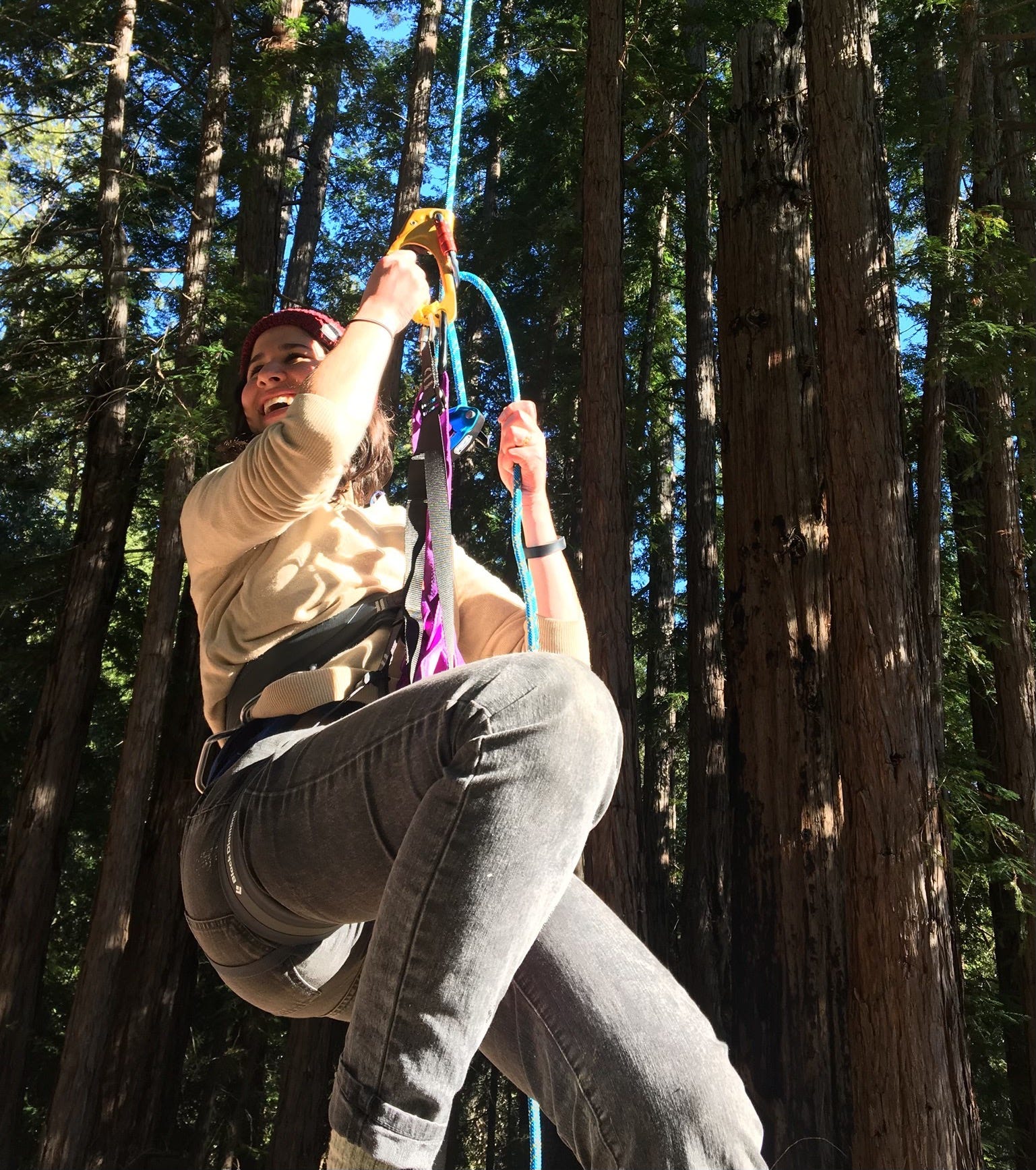
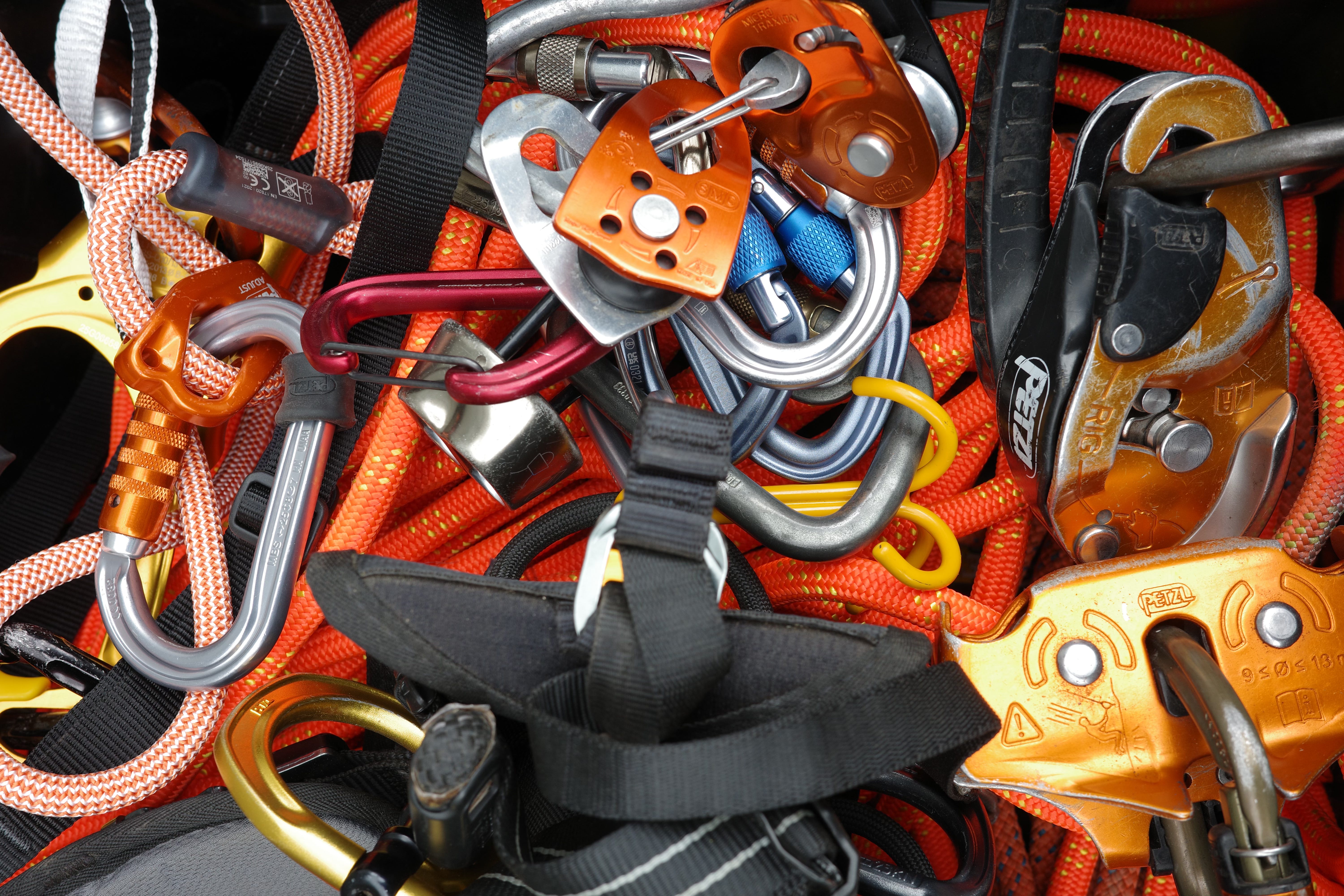
I use a Petzl Rig, which is an auto-locking descender, not too dissimilar from a Petzl Grigri you might encounter at a climbing gym. In fact, our first ascending setup used a Grigri. Look how excited Molly was by that Grigri.
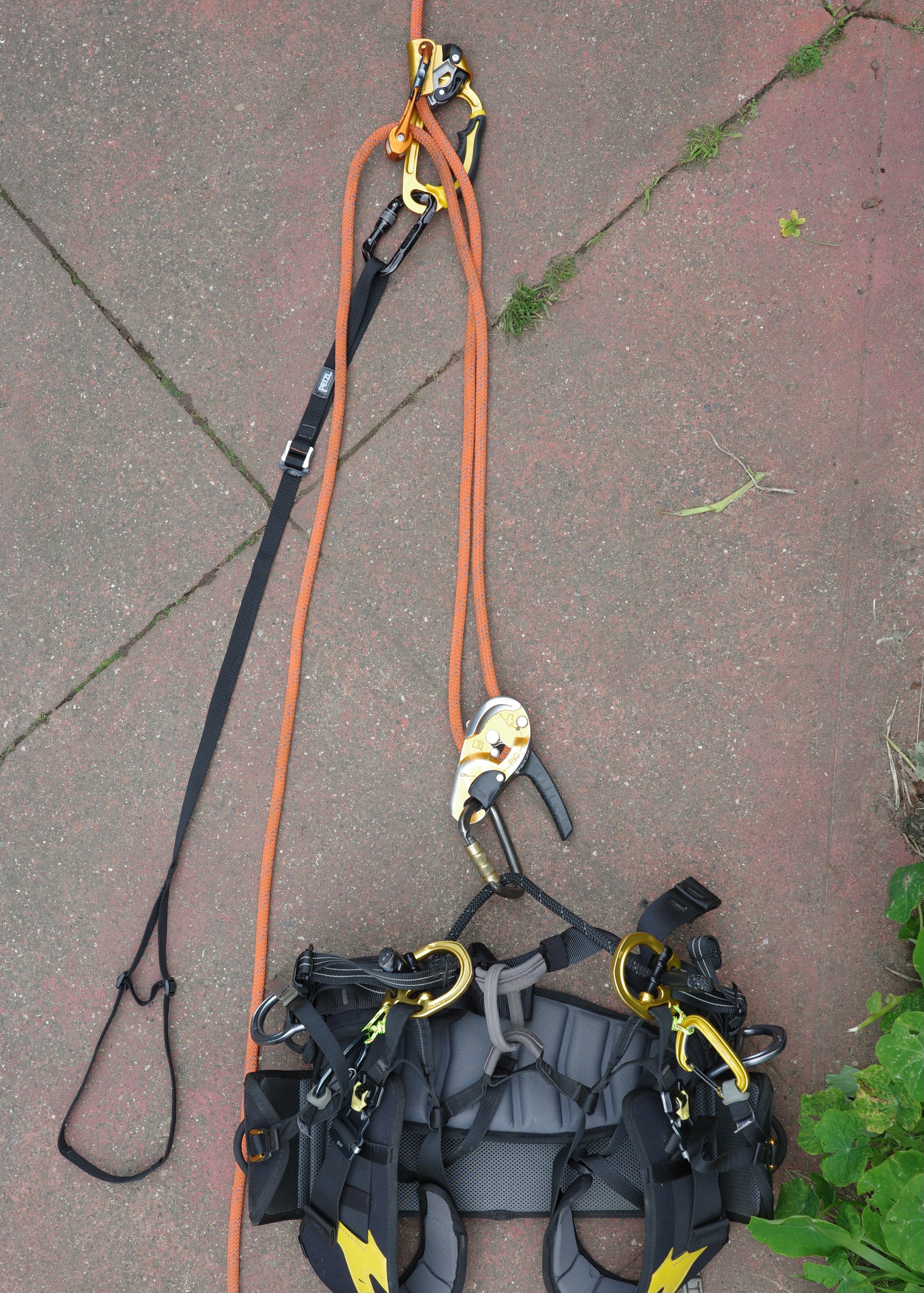
The rope comes down from the tree, through the Rig, and then up to an ascender, which has a pulley carabiner and a foot strap clipped to it. The rope loops back down, completing a 2:1 levered system. Here’s what all that looks like, attached to my Petzl Sequoia harness and bosun’s chair.
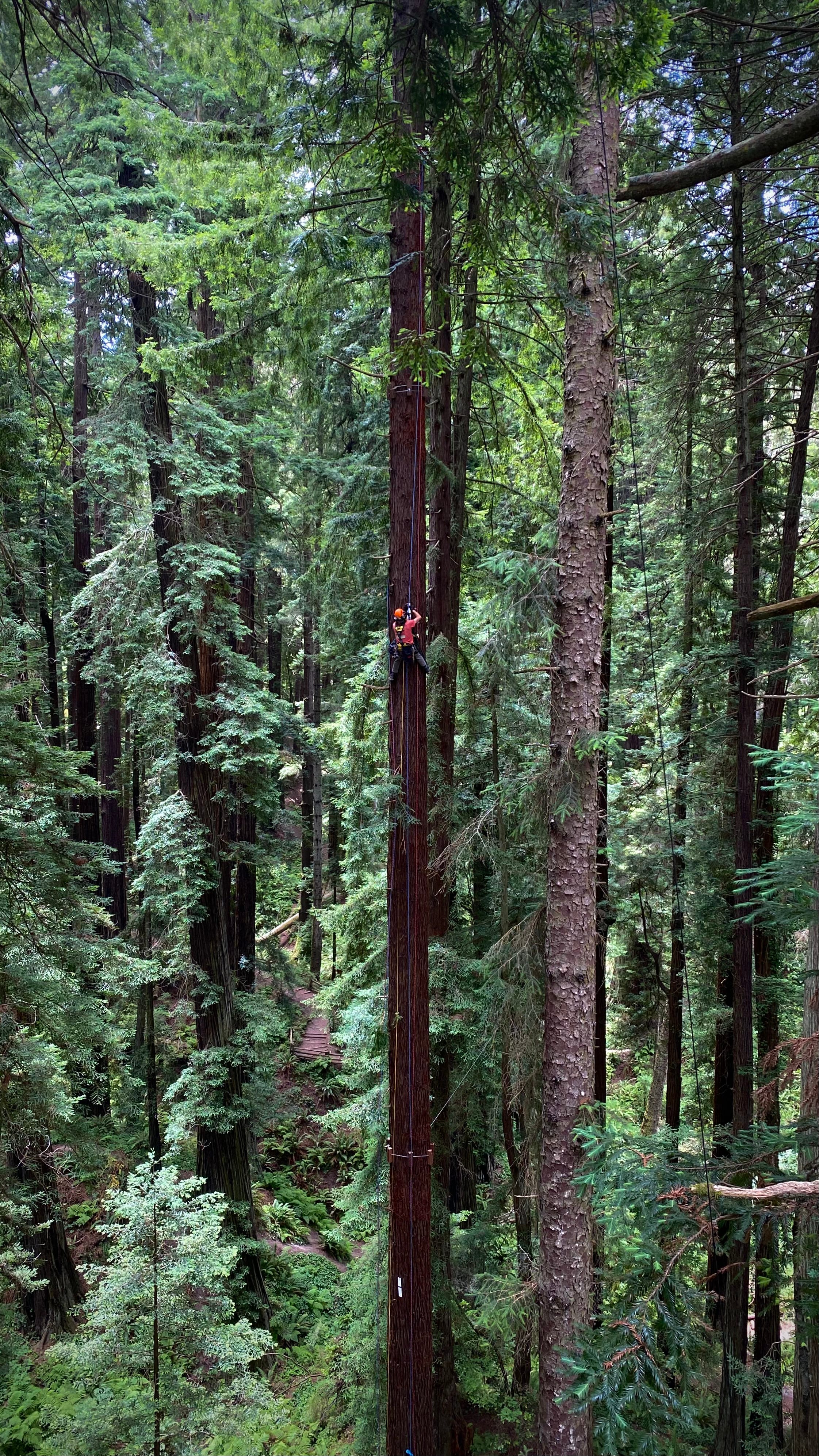
Once you’re in the harness and everything is all rigged up, it’s just a matter of inch-worming up the tree. This is called jugging. You raise the ascender as high as you can with one hand, while the other hand holds the tail end of the rope. Then you stand up in the foot strap and yank the tail end of the rope tight, which cinches you up against the ascender. Congrats. You’ve moved about two feet. Sit down in the harness and repeat the motion. If it’s a redwood, you’ve got a long, long ways to go.
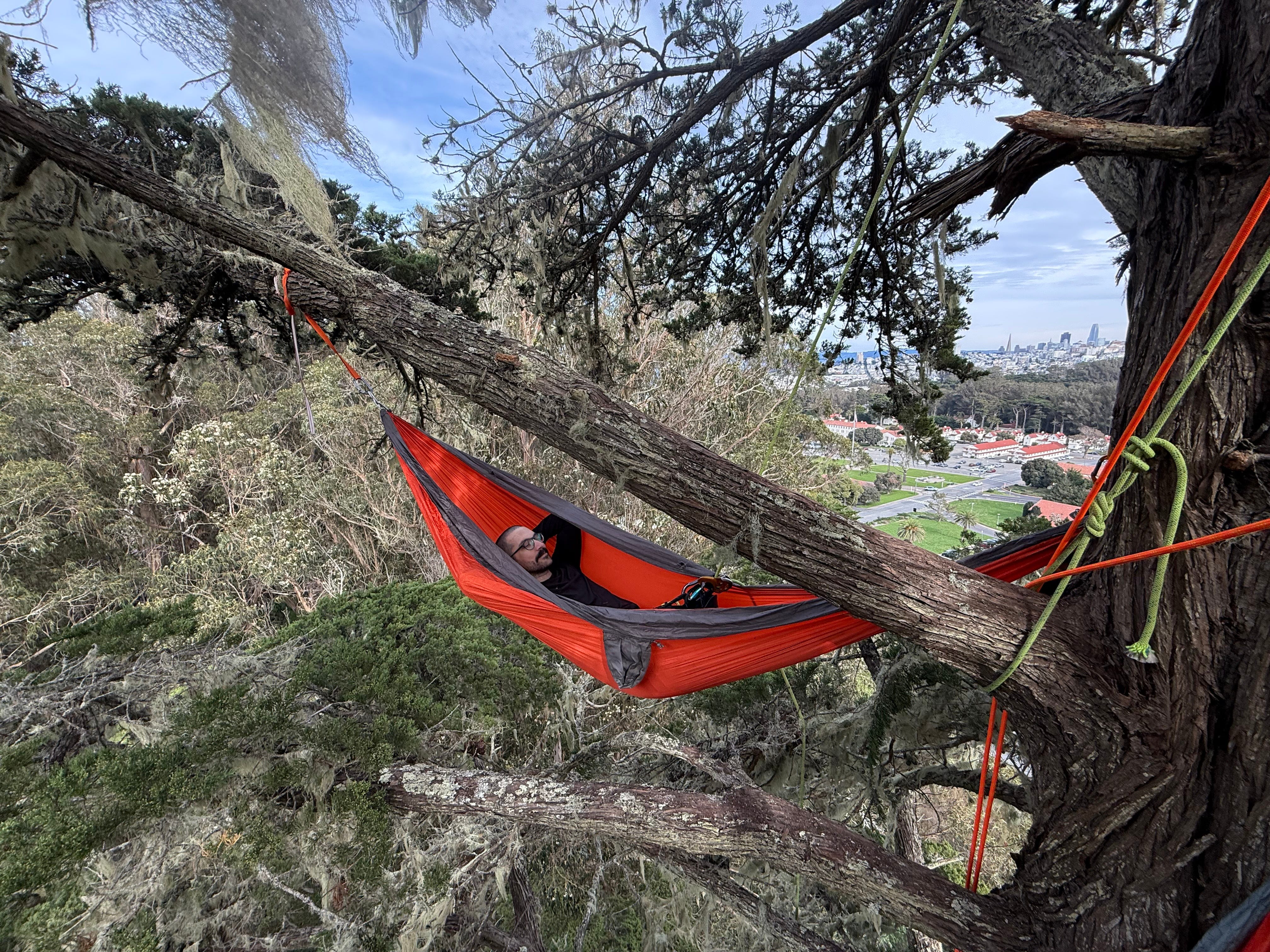
That’s kind of it. Once you’re bored with tree climbing, you unhook the ascender setup so that the rope is now feeding through only the Rig, clip it to your harness for safe keeping, and then it’s a controlled descent down to the dirt.
There’s other gear you can use to make the whole endeavor work better. A helmet, for starters. Positioning lanyards and secondary throw lines are useful for tossing around branches to move yourself about. A Micro Traxion is fantastic for hauling up supplies. But it goes on and on… rope work is a bottomless well of systems and gear and I’ve barely scratched the surface. Most of what I own fits into one tub. Or, it did until recently anyway…
You may be wondering how one gets the rope up into the tree to begin with.
For that I use Zing-it line and throw weights. The line goes over a branch, get’s tied to the rope with a whipping knot, and the rope pulled over. A tarp or collapsible box is essential, otherwise the line knots onto every stick on the woodland floor and a few rounds of fighting those knots is enough to quit the hobby altogether—or hang yourself with Zing-it. Typically I swing the weight between my legs, using a two-handed underhand throw that’s good for sixty feet or so. But I just recently bought 1000 feet of throw line, 600 feet of static climbing rope, and an eight-foot tall purpose-built slingshot that can launch those beanbags 150 feet up in the air. My tub overfloweth.


Why?
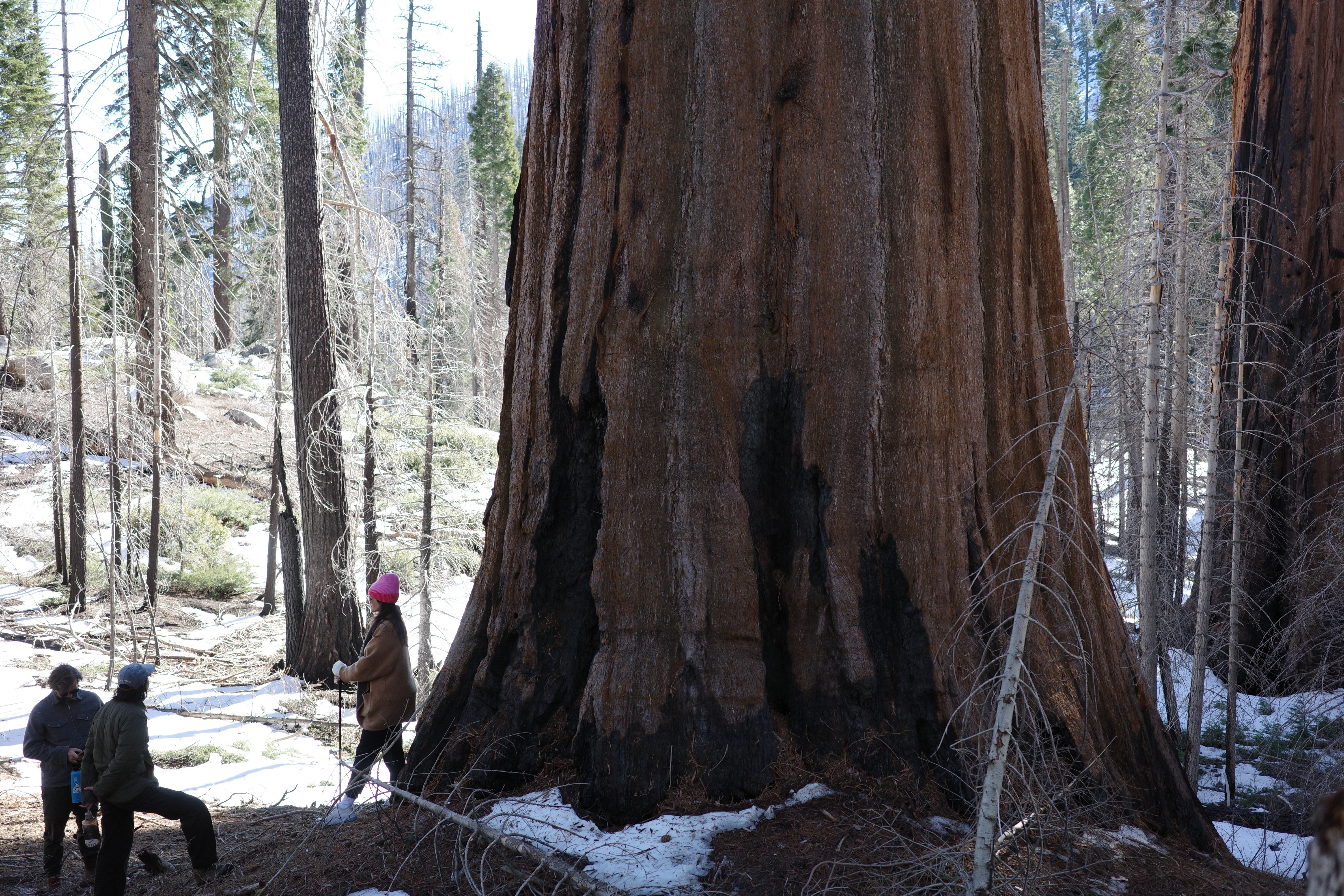
Because Tom and I are gearing up to climb to the top of, and spend the night in, a giant sequoia.
It’ll be at least a 200 foot climb up a wall of ancient wood before we can set up our hammocks, hang a stove and roll out our sleeping bags. That’s a lot of jugging, a ton of hauling, probably a few knot-fights, and will surely make for some very exciting middle-of-the-night pees.
DIRECT TO YOUR INBOX
NEW TO THE NEWSLETTER? TO BUILDING?
Start with these posts on Project Planning and Construction Basics.
Or these posts on Community Building.
Or browse. Posts wander from friendship, to workshops, to tools, to explosives. Because we contain multitudes.
Looks like fun but perhaps it is a hobby for younger folk!
We don't have trees any way near the heights of yours and their branches are prone to fall off. A bit discouraging.