

Giant Sequoia Climb
Adventurous jugging and canopy miscalculations

Back in February I mentioned that my friend Tom and I were gearing up to climb a giant sequoia and spend a night in the canopy like a couple of owls. I’m a big believer in sharing novel experiences with friends1 and Tom and I have climbed some trees together and love an adventure, and I dig owls, so this really hit the notes. We planned to sleep in hammocks and use a hanging stove for dehydrated meals and freeze-dried coffee. Vertical backpacking, basically.
A couple weeks ago, after months of scheming and some lesser-tree practice, we finally made the trek and accomplished (some of) our goal. Here’s how that adventure shook out.
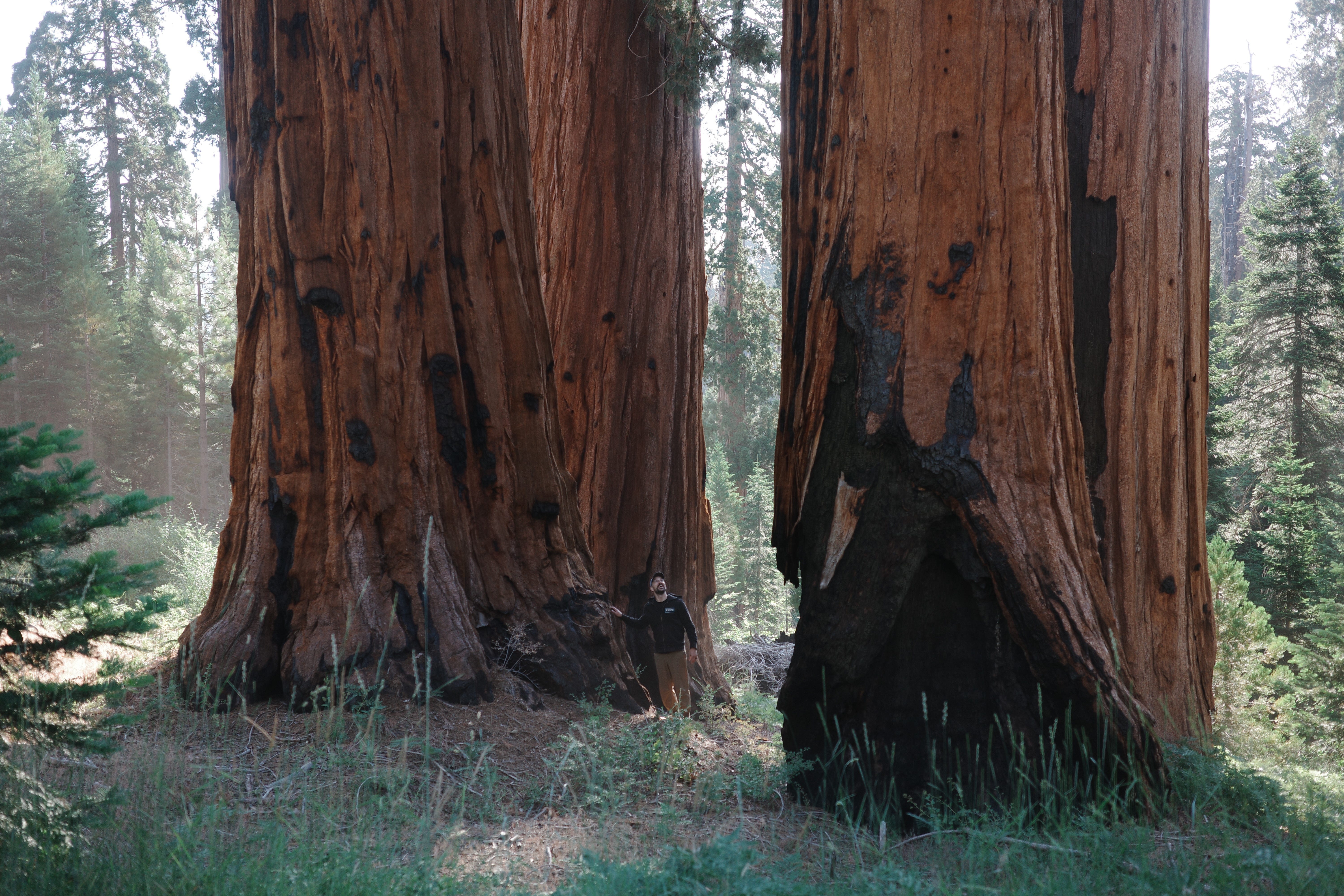
We drove six hours to a cluster of trees in Sequoia National Forest, near the southern tip of the Sierra range. I’d found promising groupings via reports on iNaturalist and had scouted some of those trees this past winter, but one particular stand had been previously inaccessible due to snow. We arrived at this grove after lunch (and a requisite river dip) then spent the afternoon touring timber. A few called out, but one prominent tree was the most exciting candidate. Reasonable hike off the road, thick canopy that sprawled above the surrounding pine, and branches that started “only” about 90 feet up. This broad monolith towered over 200 feet, was 12-feet across at the chest, and sported a fire-scar where its bark parted. She was a beaut. There was no need to go further.


The plan was to camp at the truck and then tackle the tree the following day. But we had several hours of daylight remaining so we figured we’d see if it was even possible to get a line up. It took better than a half-dozen attempts with our eight-foot tall Big Shot slingshot to get a beanbag weight and throw-line over one of the lowest limbs. But, once over, we were able to pull a rope over the branch and tie it off on the ground.
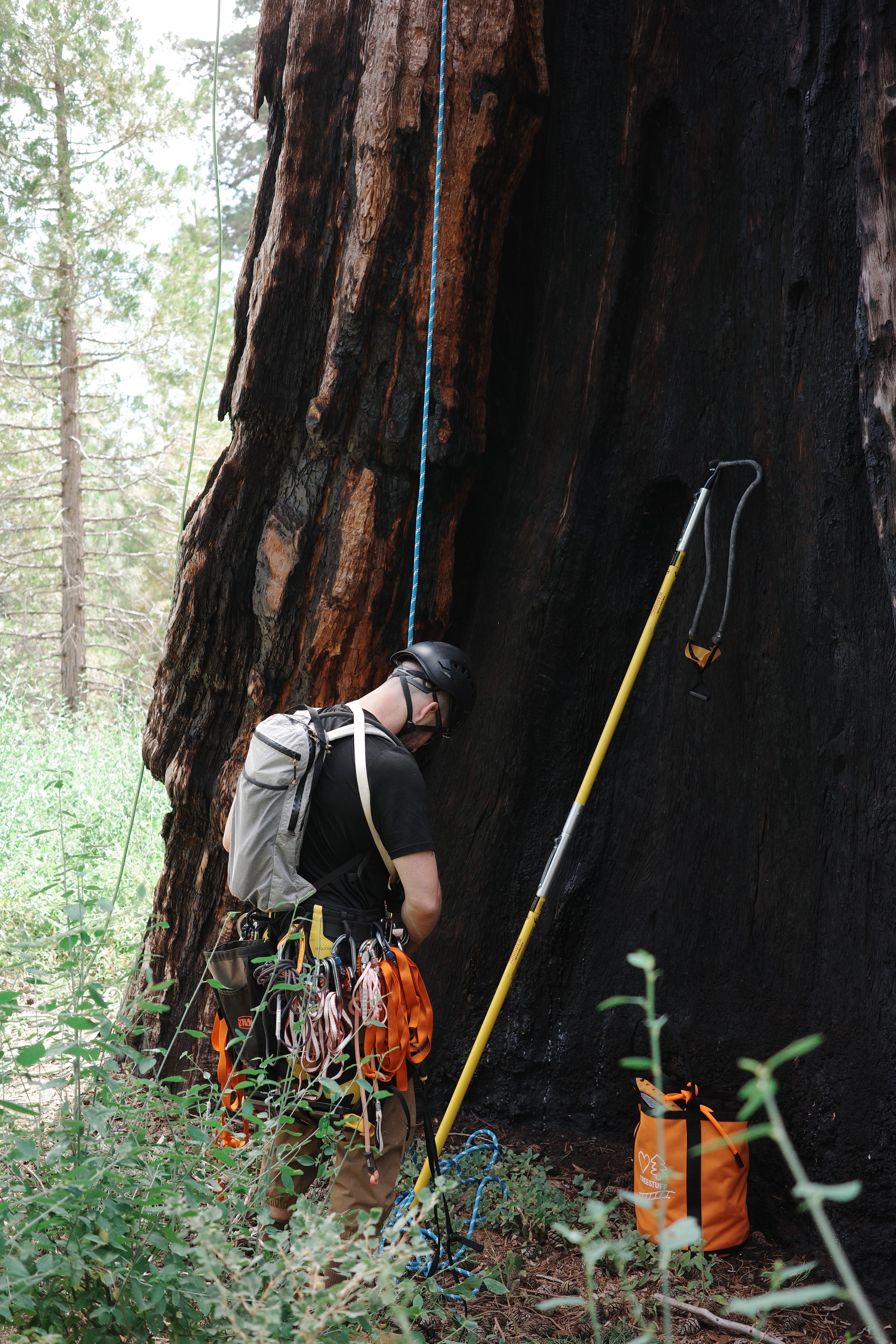
Tom took the first climb and “jugged” up the rope. Eighteen minutes later and he was hanging under the timber, trying to figure out how to chuck his short throw-line over the next good branch to repeat the process. But the only helpful limb was 30 feet directly above him. So when threw the beanbag—with nothing to push off against while pivoting from his harness and trying to somehow hurl vertically around the branch he was strapped to—it flew a disheartening six feet. After a few more tries he switched to using half of the slingshot and a positioning lanyard to move himself to a clearer path. But still, no dice. Eventually, after two hours(!), Tom was fading and seeing diminishing returns, so he rappelled down. My turn. I ascended, bringing the large throw line box and the full length Big Shot for a fresh approach.


The full body workout of hanging in space while cocking back the Big Shot’s bands—an eight-foot tool that’s intended to jam into the ground for support—took everything I had, especially after that long jug up. I was shaking as I fired, which made aiming more luck than skill. But the Big Shot blasted a beanbag deep into the canopy and I got much closer to the branch than we had yet. So I kept at it. Attempt after attempt. Though as I neared my own two-hour mark I still hadn’t actually gotten a line through the crotch. That whole aiming thing… This was frustrating not just because it was exceptionally tiring, but because our inability to get a line over that particular branch meant there was simply no way we were going to climb this tree. Starting from scratch—and the implied possibility of this not being feasible at all—was a weighty proposition. Plus it was about to get dark.
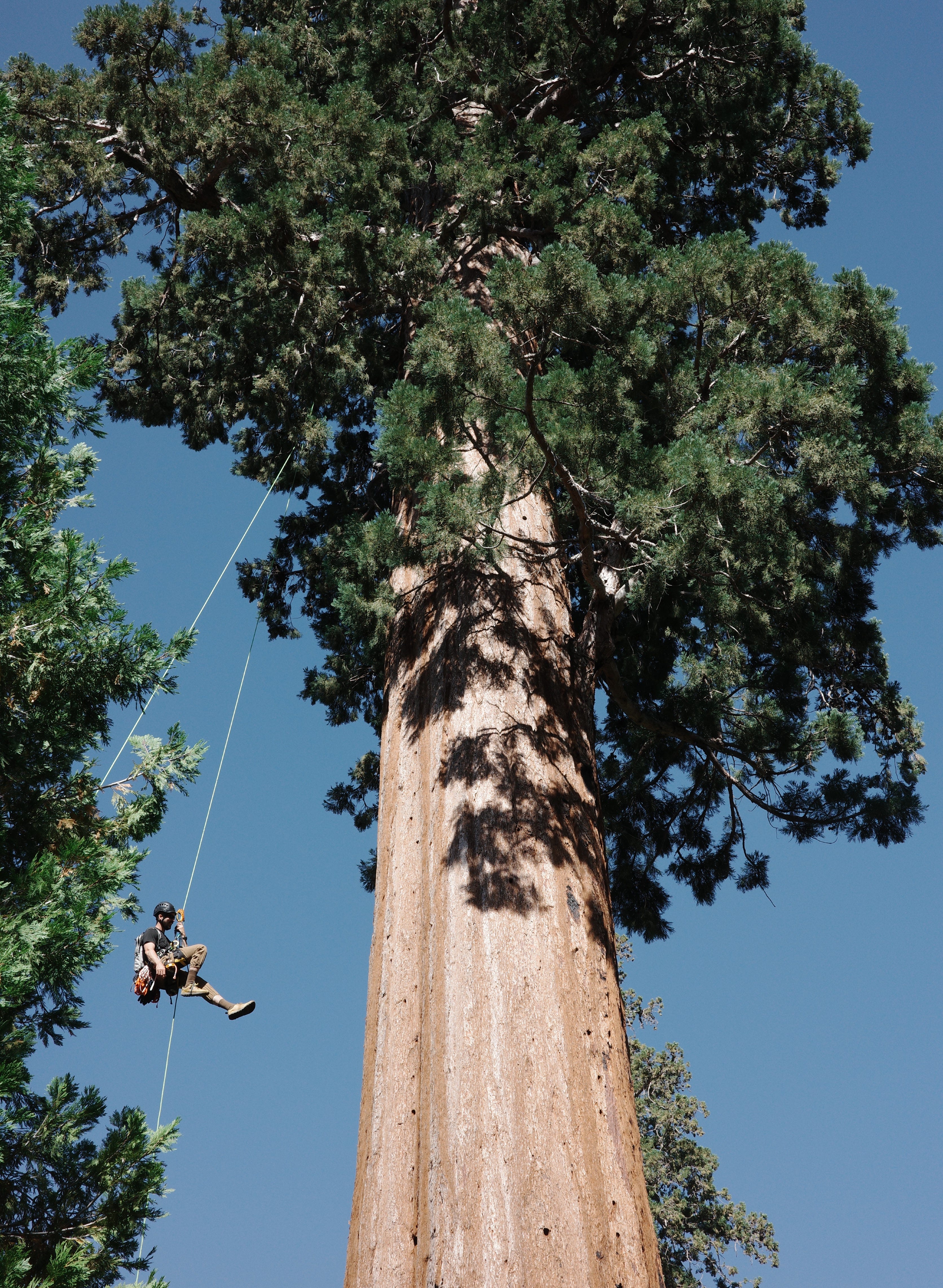
Tom suggested I give it one last try and then call it. I did and missed yet again, but got even closer still. I yelled down “Okay, for real, this is the last one. Hold me to it. Final shot. I promise.” I fired, and the beanbag finally sailed over the branch. Got it. We pulled a new rope over and now had a path well into the canopy at about 130 feet. All told this took us four hours and was brutally tiring. With only the Step One in the bag we went to bed already sore.
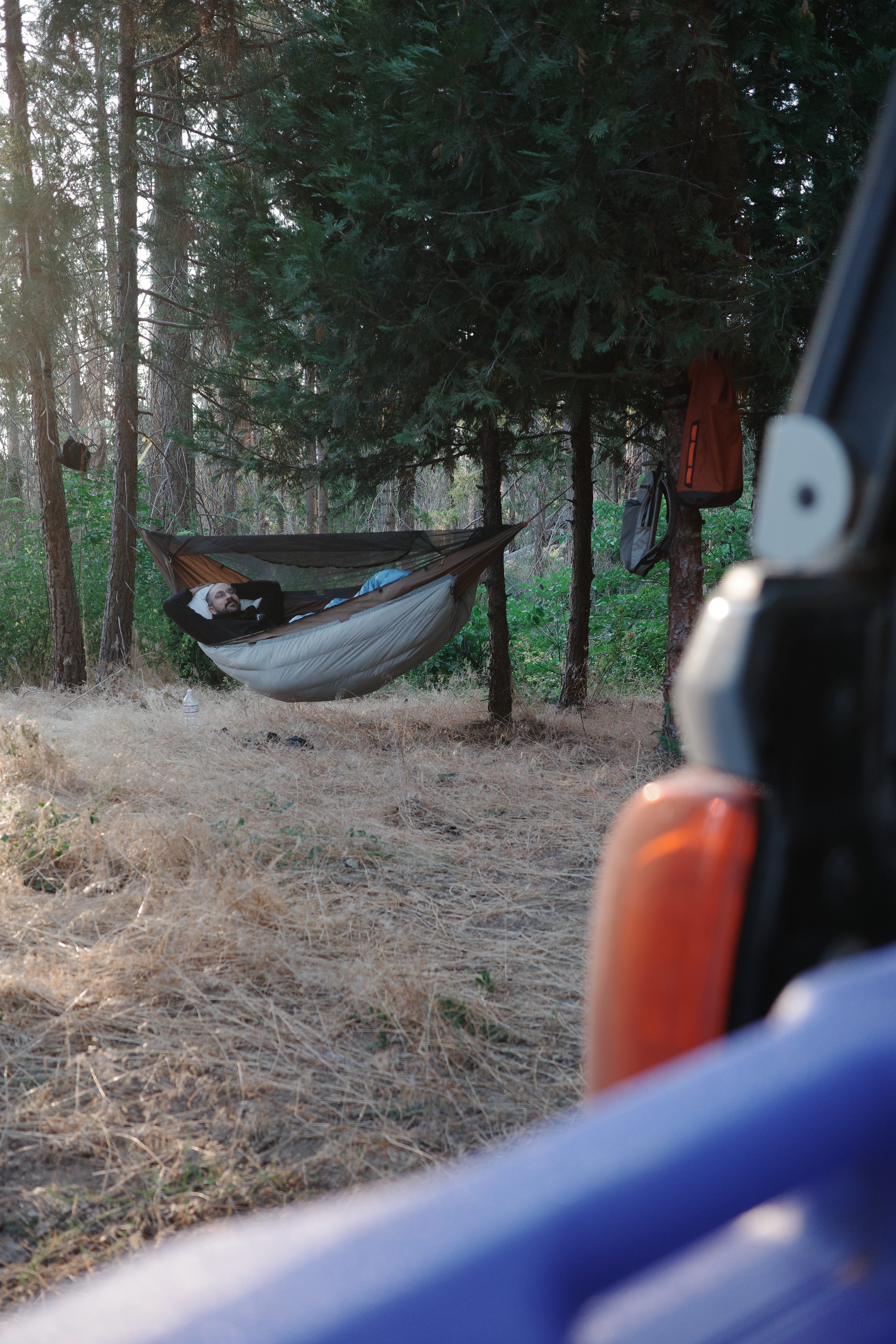
The next day we started climbing at 11am. Since I had done the last run, Tom took first stab. Our new height was pushing the limits of yelling critical commands (and safety), so we strapped on the walkie-talkies. Note: Walkie-talkies2 make everything, especially anything one might call an adventure or expedition, way more fun.
Below is a video of Tom that gives a sense of scale of the tree and where that first line put us. You might think we were nearly at the top. So did we. Spoiler: we were not.
We were however truly in the overstory and above most of the pine, fir, and cedar in our corner of the woods. Up here the sequoia’s limbs were huge. Imposing. A branch would look fairly normal from below, but as we’d close in it would end up a couple feet wide and a few feet tall, careening laterally at distances that felt impossible given its mass. Impressively, the trunk had hardly narrowed on the climb up. Just this massive column of foot-thick bark with swirling patterns that logged ~1500 years of gnarled growth and an indifference to the human-scale of time.
The novelty of such chunky wood so high off the ground never really wore off. It sets sequoias apart—where other conifers might divide their resources among many smaller branches, sequoias have fewer (but comically gargantuan) limbs. From this vantage we now had eyes into the canopy of other ancient giants and we could tell that they (along with our tree) didn’t have quite as dense of foliage as appeared from the ground. Limbs were staggered around the barrel-chested trunks and spaced 10 feet apart or more, making hand-climbing this tree, or most others, impossible. Which meant slow going.
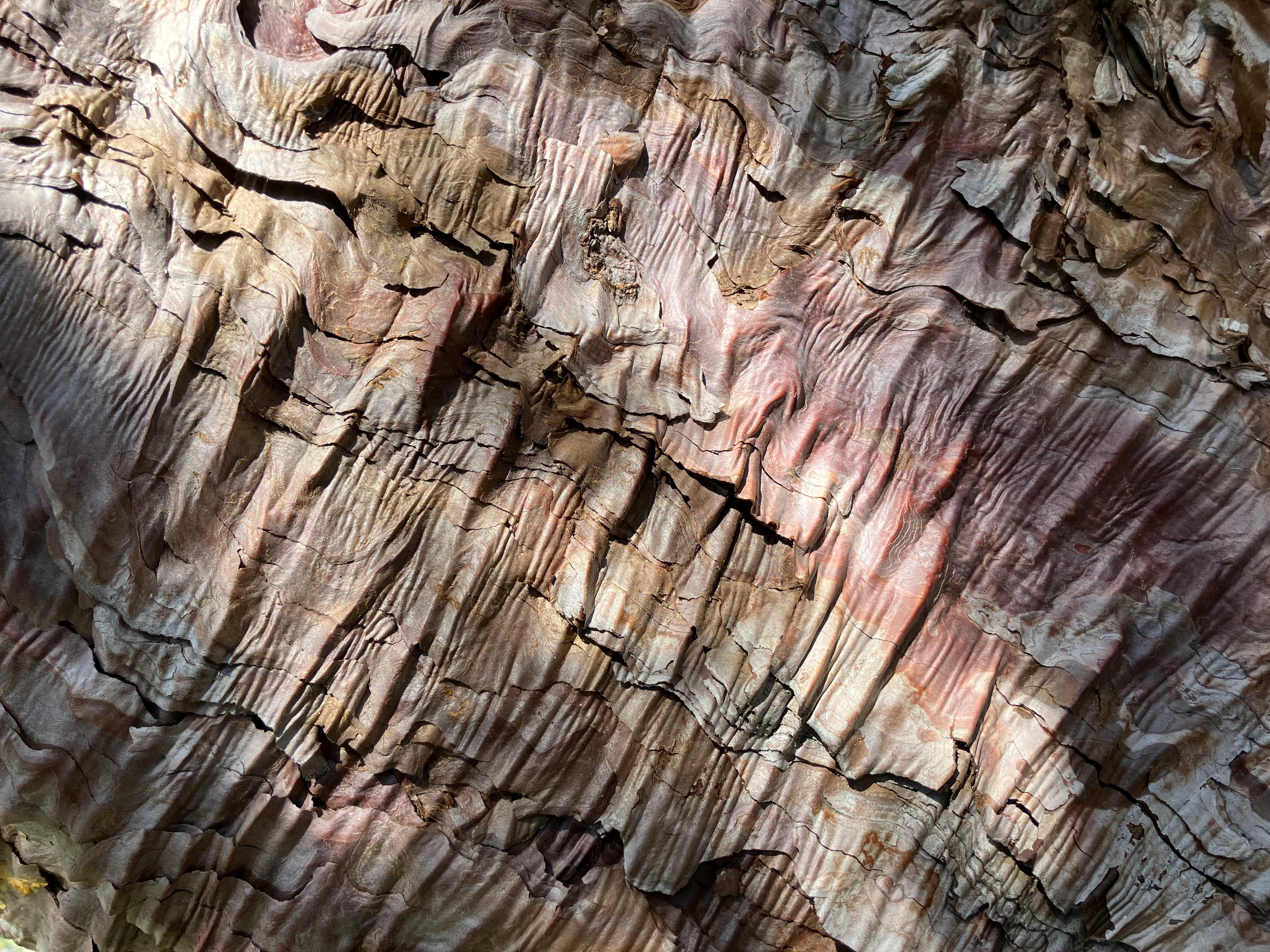
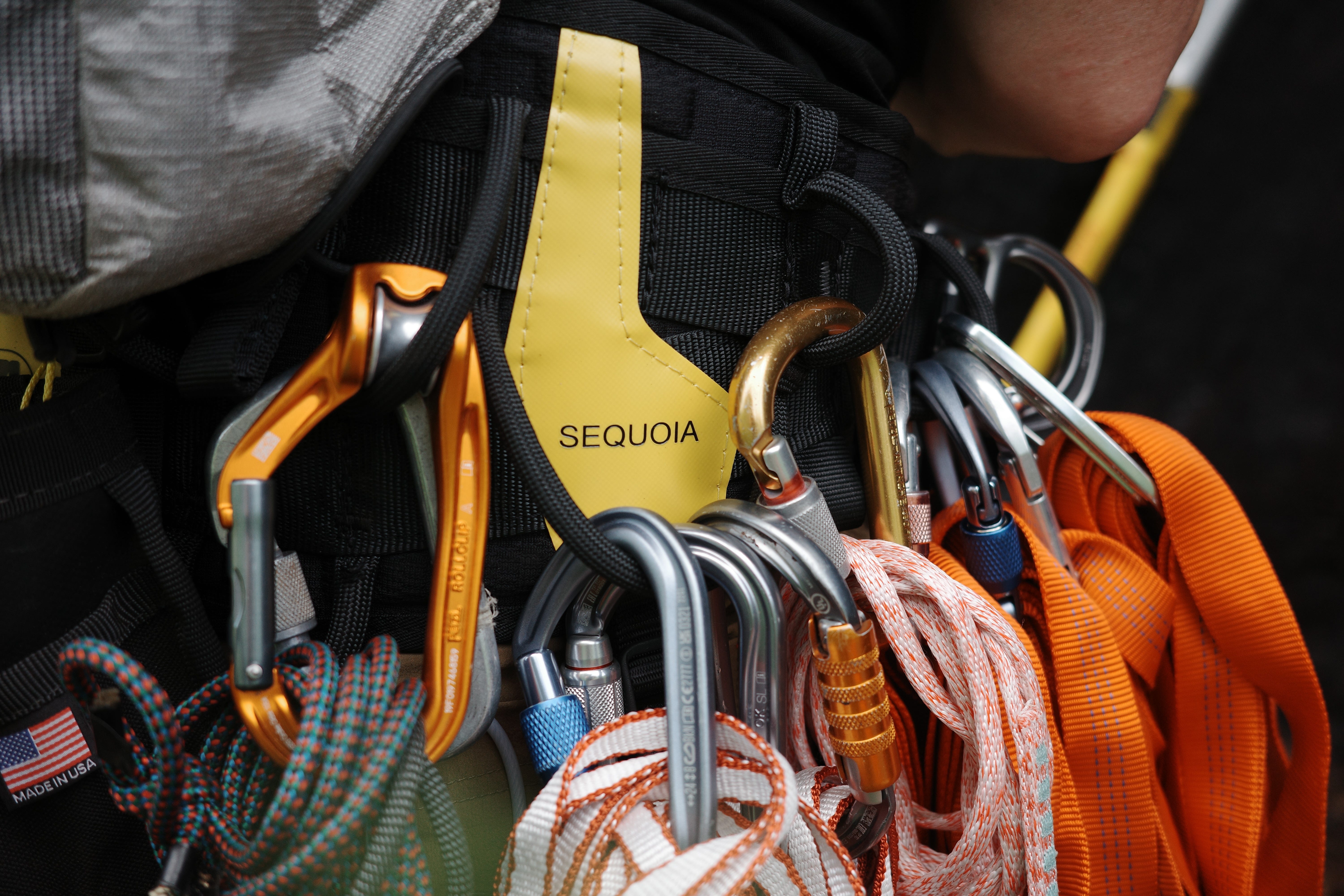
To ascend we’d been following the same process as the previous day, jugging up the rope and hurling a line (this time entirely by hand) to the next useful branch. We were climbing together, casting new lines for the other guy so we could leap-frog one another with each new rung. It proved a snail’s pace and similarly draining as the day prior—the jug up the rope, the throwing (and so much missing), having to tie off (with redundancies) to transition from one rope to the next, and managing all the lines, pulleys, haul bags, slings, and inevitable tangles. We were towing over a thousand feet of rope and each limb gained was an exercise in rigging, positioning, and how exactly to allocate all that line so that each person had a logical path up and a clear route down. Only a handful of pitches above the day’s first branch and I could already feel my brain turning to mush while trying to consider the details of each setup with the hyper-fixation that it demanded. That might just be a me thing though—Tom seemed to be thriving.


I explained my mental frazzle to a friend a couple days later. “Imagine you’re completely exhausted. Totally fried. Your hands hardly work, but you’re not allowed to drop any gear—that could be catastrophic. And you also have to do a puzzle every fifteen minutes or so. And if you do the puzzle wrong, you or your friend die. I was being a touch hyperbolic. But only slightly.
Eventually we reached the “summit.” The final branch was still more than two-feet thick and the trunk nearly four-feet wide. These trees are just massive. The top of our tree had blown off long ago so there was a rotted crown with a few growths poking out the top. We had hung lines as high as we dared and crested 200 feet when we hit those anchors. This was six hours in. Ten hours in total just to reach the top—an average climb of just 20 feet-per-hour.
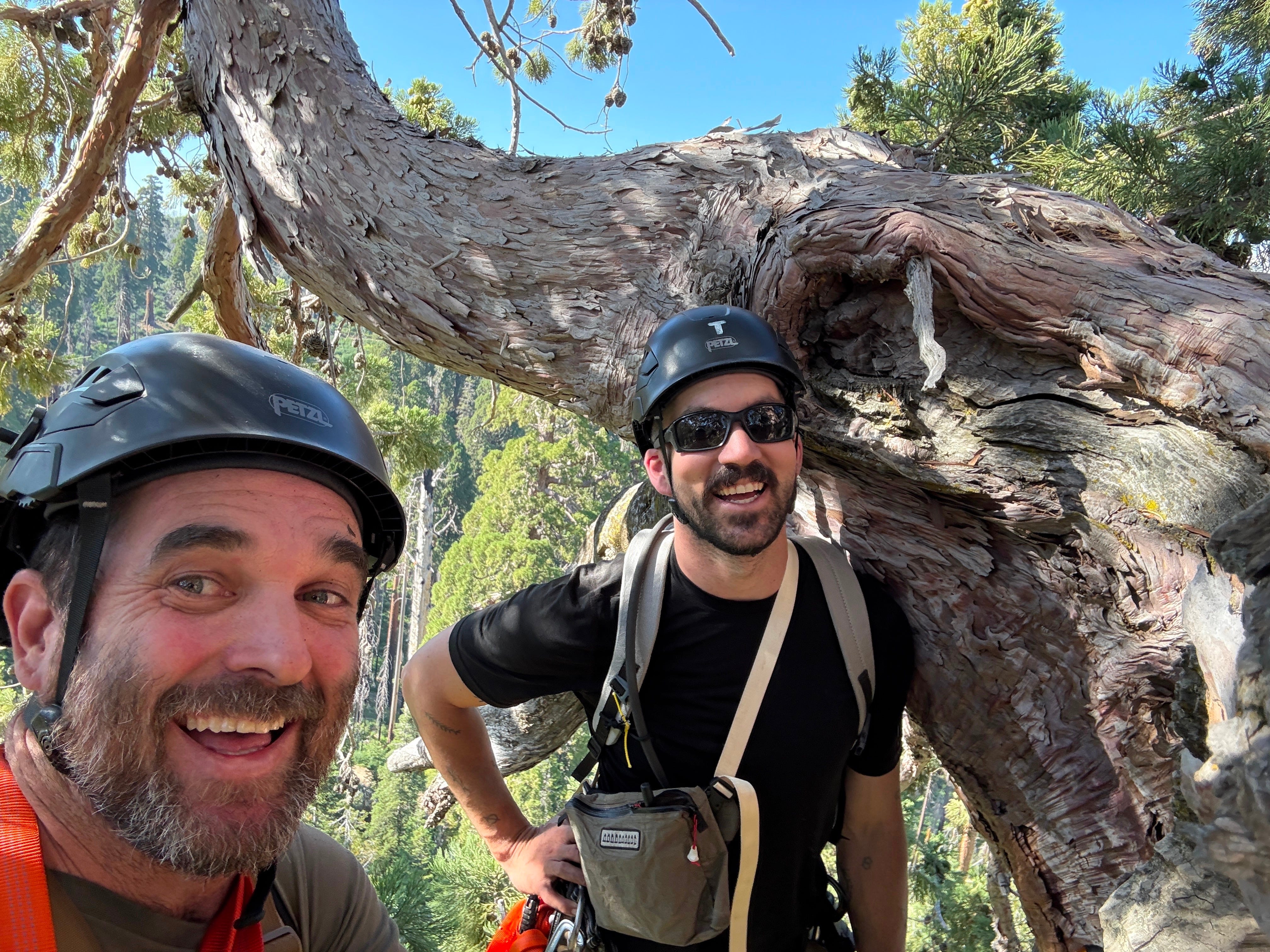
After some time relishing our top-out and enjoying our summit treats (Hot Tamales for me, Good & Plenty for Tom) we set a couple more lines high in the tree for us to work from below and descended about forty feet to the spot we figured we’d camp. It wasn’t going to be easy. Since the “robust canopy” we’d seen from below was actually quite sparse there was no dense wooded cluster or obvious perch to string two hammocks or “make camp.” Nor any limbs to grab onto and move about, as they were all several feet thick. But we kicked around a few hopeful ideas and, either way, the sun would set soon and the first order of business was setting up our double rope rappel line down to the ground—if the weather turned during the night, or anything went sideways, we needed a clean exit.
We started pulling the blue long line to route it over the upper limbs and down to the ground and realized it was snagged down near the ground, all knotted up with branches and with another rope of ours. We’d bought this sapphire blue 600-foot spool of static rope which seemed crucial (this rappel alone would use 400 feet) but the downside was that the excess could get tangled if not managed well. And apparently we didn’t manage it well.
As it stood, we had no clean egress from the sequoia. The only way out was for someone to rappel down to the knot on a single rope and an auto-lock descender to use both hands on clearing the tangle, which is not something we’d want to do in the dark, or in an emergency, or both. With daylight closing out tackling this task would eat up the day. But we decided pretty quickly this was the priority and so camping was canceled.
Tom descended to untangle the rat’s nest and then continued down to the dirt. I labored on clearing out the rest of our lines and anchors, setting up the long rappel line down to the ground, then worked my way out of the tree. By the time my feet hit the earth it was two hours after we summited and once the ropes were packed and we’d gotten to the truck the sun was down.
A long day to (kinda) backpack only 200 feet.
I can’t say I’m entirely disappointed about the camping failure. As I said to Tom, it certainly felt like we did the hard part. And the main goal of sharing a unique experience and doing something thrilling was well accomplished. There was no great place to string a couple hammocks and it was going to be a hassle moving about “camp” without any branches to grasp. Also, there was no obvious breakfast-limb, so I’m not even sure where we would have shared our morning coffee—and on that note, the urgency of Tom’s clockwork morning constitutional was always a major question mark. Plus, even though harnessed in, I’ve got a healthy degree of unease about spending a night in a hammock, high in the Sierra Mountains, with 150 feet of air under my ass (though that’s actually a reason to do it). But ultimately I know we made the right call safety-wise, so it’s all fine. Better than fine really. It was fucking rad.
I’m certain Tom and I will spend a night in a tree soon. Maybe a thicker canopied coast redwood or a cypress. Something with a decent coffee perch and a shorter rappel down to the bathroom below.
DIRECT TO YOUR INBOX
NEW TO THE NEWSLETTER? TO BUILDING?
Start with these posts on Project Planning and Construction Basics.
Or these posts on Community Building.
Or browse. Posts wander from friendship, to workshops, to tools, to explosives. Because we contain multitudes.
elevatedspaces.ca | Instagram | YouTube
As you’re (probably literally) reading this my friend Adam and I are doing rally school together. Three days of speeding down dirt roads and drifting around corners.
Walkie-talkies seem like they must have been named by an Australian, if you’re familiar with the Aussie tendency to call things by cutesy nicknames that end in “y” sounds.